Shetland sits closer to Bergen than it does to Edinburgh. From the southern tip of the Mainland, the nearest railway station is a full day away by sea, and the islands scatter north for another sixty miles beyond that. For most visitors, this remoteness settles the question of how to arrive before it is even asked: you fly. The gateway is Sumburgh Airport, perched on a narrow neck of land at the southern end of the Shetland Mainland, and it is the single airport handling scheduled flights to the whole archipelago.
This guide covers who flies there, how the sea alternative stacks up, and the practical realities of booking a trip to somewhere the weather genuinely has a say.
The route: Aberdeen and the Scottish cities to Sumburgh
Every scheduled flight to Shetland lands at Sumburgh (LSI), and every one of them is operated by Loganair, Scotland's regional carrier. Year round, the airline connects Sumburgh with five airports: Aberdeen (ABZ), Edinburgh (EDI), Glasgow (GLA), Inverness (INV) and Kirkwall (KOI) in Orkney.
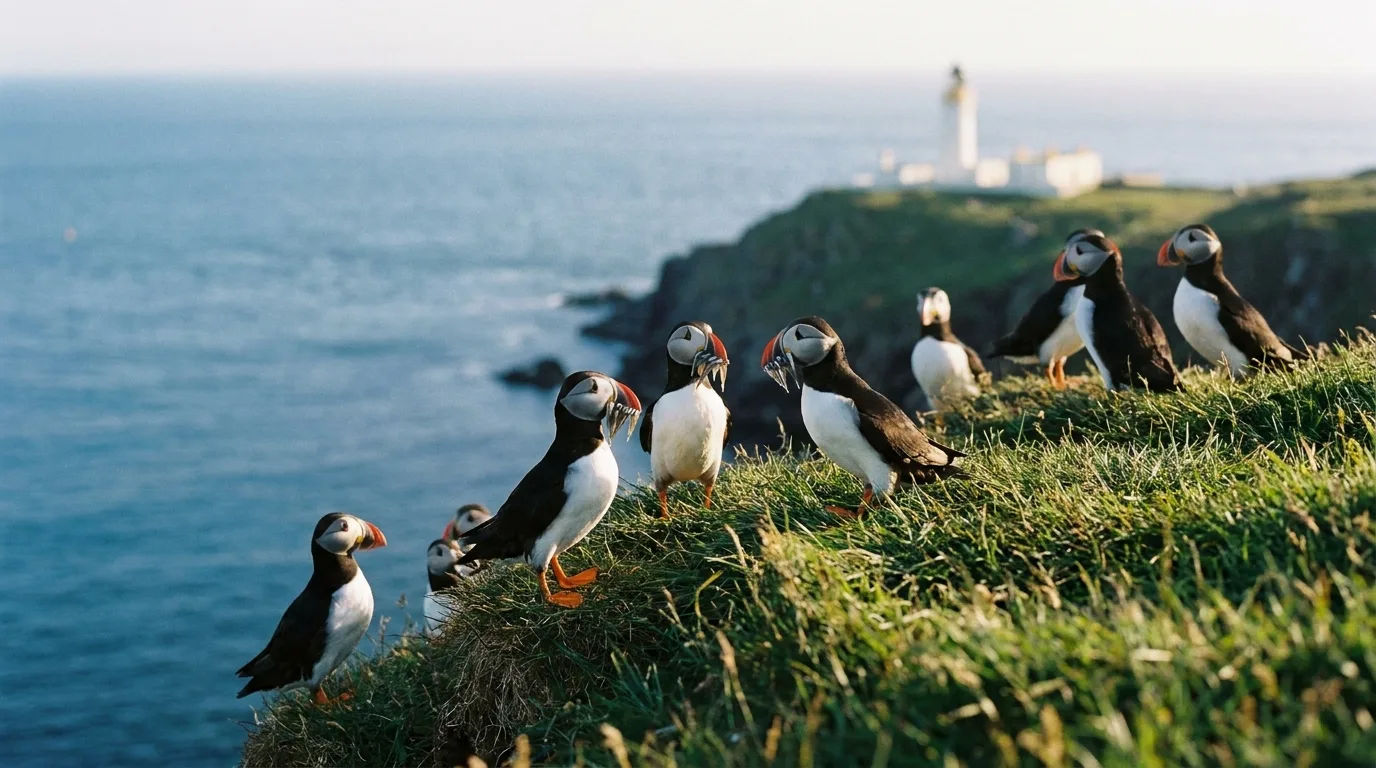 Puffins on the cliffs at Sumburgh Head, Shetland · Illustration generated with AI Aberdeen is the workhorse of the network. It is the shortest hop at roughly one hour, and it runs at the highest frequency, which makes it the most reliable connection and often the easiest to rebook when weather intervenes. From the central belt, Edinburgh and Glasgow are around 1 hour 30 minutes each, Inverness is a little longer, and the short island-to-island link from Kirkwall takes about 40 minutes. Seasonal and less frequent services have come and gone over the years from the likes of Bergen, Manchester and elsewhere, so if you see one advertised, treat it as a summer bonus rather than a fixture and confirm it directly.
Ready to check Sumburgh fares?
Aberdeen is the shortest, most frequent hop to Shetland, so start your search there.
Getting there by air: the mainland routes and who flies
Loganair flies these routes with ATR turboprop aircraft (the ATR 42 and larger ATR 72), workhorses chosen for their ability to handle Sumburgh's exposed, weather-prone runway rather than for glamour. The Aberdeen corridor in particular sees the heaviest schedule, built as much around the offshore energy industry and island residents as around tourism, which is good news for visitors: it means several rotations most days and genuine flexibility if a flight is disrupted.
Because Loganair is the sole operator, there is no competing carrier to shop against on price. What you can do is compare which mainland gateway suits you. If you are travelling from England or overseas, connecting through Aberdeen usually gives you the most rebooking options if the weather turns. From the central belt, a direct Edinburgh or Glasgow departure saves you a change. Fares behave like any regional route: they climb as seats fill and as your date approaches, so the earlier you commit, the better. Always confirm the current timetable and aircraft on Loganair's own site before you book, as schedules shift by season.
Beyond Sumburgh: the inter-island flights from Tingwall
Sumburgh is the gateway, but it is not Shetland's only airfield. A short drive from Lerwick sits Tingwall Airport, the hub for Shetland's tiny inter-island air service. These are not mainland flights: they are lifeline hops out to the smaller, further-flung islands, currently flown on behalf of the local authority using rugged Britten-Norman Islander aircraft built for very short strips and rough weather. Destinations typically include Fair Isle, Foula, Papa Stour and Out Skerries, places where a boat can be cut off for days.
These services run to a specialised timetable, are aimed largely at islanders, and are subject to change and to funding reviews, so if reaching one of the outer isles is part of your plan, book well ahead and confirm the current operator and schedule before you rely on it. For the vast majority of visitors, though, Sumburgh plus a hire car is all you need.
That is the heart of the case for flying to Shetland. The islands are remote enough that road and rail simply do not reach them, the flight from Aberdeen is barely an hour, and the alternative involves a night at sea. Flying is not the indulgent option here; it is the practical default.
Flight versus ferry to Shetland
The sea route is a real and characterful alternative. NorthLink Ferries runs the overnight crossing from Aberdeen to Lerwick, at 216 miles the longest internal ferry route in the UK, on the vessels Hjaltland and Hrossey. Sailings depart in the evening and arrive into Lerwick around 07:30 the next morning. A direct crossing runs roughly 12 hours; sailings that call at Kirkwall in Orkney en route take longer, so check which your date is booked on.
| Fly (via Sumburgh) | Ferry (Aberdeen to Lerwick) | |
|---|---|---|
| Operator | Loganair | NorthLink Ferries |
| Journey time | About 1 hour from Aberdeen | Roughly 12 hours, overnight (longer via Kirkwall) |
| Arrival point | Sumburgh, south Mainland | Lerwick, central Mainland |
| Best for | Speed, short breaks, connections | Bringing a car, avoiding a hotel night, the experience |
| Weather risk | Fog and wind can delay or divert | Rough North Sea crossings possible |
| Vehicle | Hire a car on arrival | Take your own car aboard |
The ferry wins if you want your own vehicle, prefer to sleep your way north, or simply enjoy the passage. Flying wins on time and, for a short visit, on total cost once you factor in a cabin. Many visitors fly one way and sail the other to get the best of both. Always confirm current sailing times, fares and cabin availability with NorthLink directly.
When to go and how to book
Shetland's summer is the draw: the simmer dim, the long twilight when it barely gets dark, runs through June and July, and this is peak season for birdlife, festivals and settled-ish weather. It is also when flights and accommodation book up earliest, so reserve well ahead. Shoulder seasons are quieter and cheaper. Winter has its own appeal, not least Up Helly Aa, the fire festival held in Lerwick, but daylight is short and disruption is likelier.
Whichever season you choose, build slack into your plans. Sumburgh is one of the more weather-affected airports in the UK, and fog and strong winds can delay, divert or cancel flights at short notice. Avoid booking a Sumburgh flight that connects tightly onto a last onward service the same day, and consider travel insurance that covers disruption.
Somewhere to stay in Lerwick
Base yourself in Shetland's capital and explore the Mainland from there.
What to do once you land
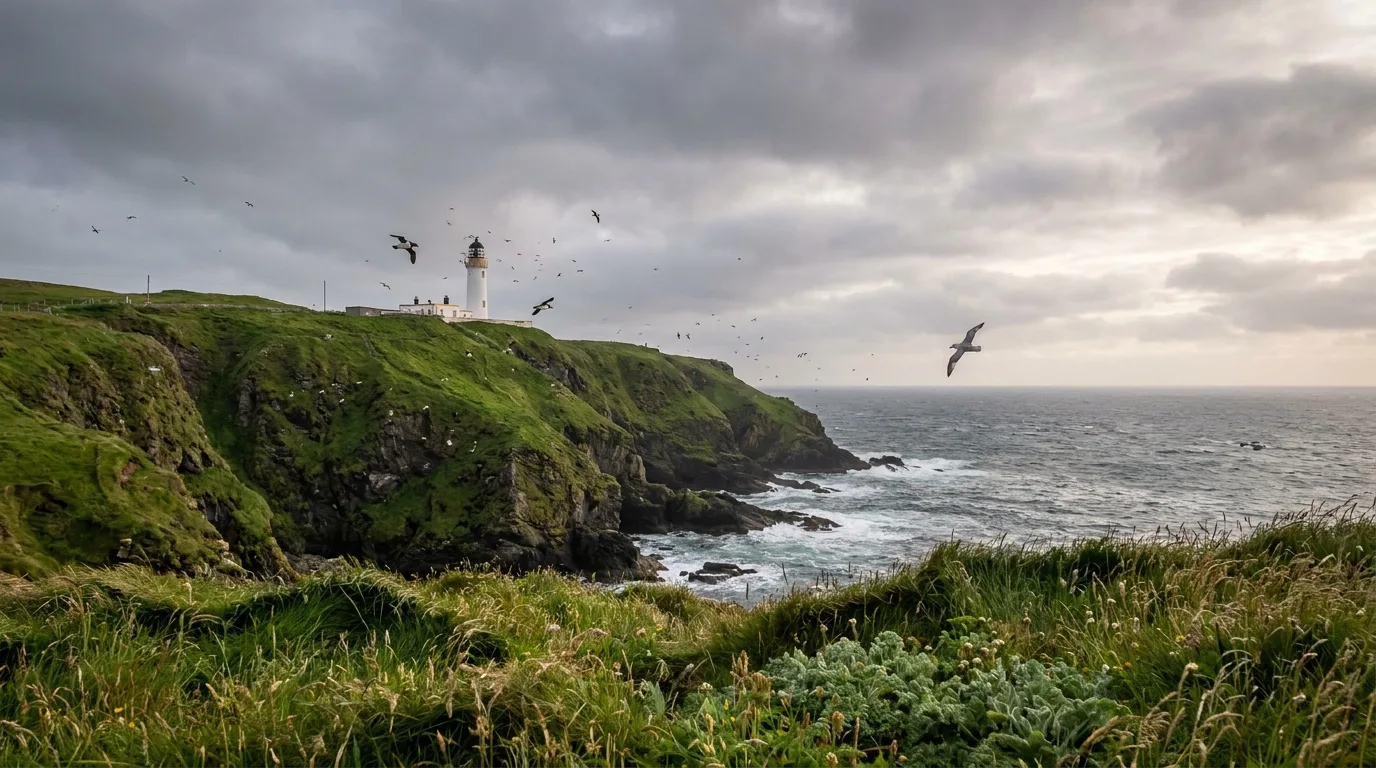
Sumburgh puts you right beside one of Shetland's headline sites: Jarlshof, a remarkable layered settlement spanning Bronze Age to Norse periods, sits within walking distance of the terminal. The nearby Sumburgh Head lighthouse and cliffs are among the best spots in Britain to see puffins in early summer, along with gannets and other seabirds.
From there the Mainland opens up: the capital Lerwick with its stone waterfront and the Shetland Museum, the prehistoric broch of Mousa reached by boat, the white-sand tombolo at St Ninian's Isle, and craft studios, knitwear and seafood the length of the islands. A hire car is close to essential, so book one to collect at Sumburgh when you book your flight.
Plan the rest of your island trip
Shetland is one stop in a much larger map of Scottish island flying. Our Scottish island flights guide sets out how Loganair's network stitches the islands together, and if you want the polar opposite of Sumburgh's exposed runway, read about the beach landing at Barra, the only scheduled beach runway in the world. You can also browse every gateway on our airports directory to plan a multi-island trip.
Routes, schedules, aircraft and sailing times change by season and can be disrupted by weather. Always confirm the latest details directly with Loganair, HIAL/Sumburgh Airport and NorthLink Ferries before booking or travelling.