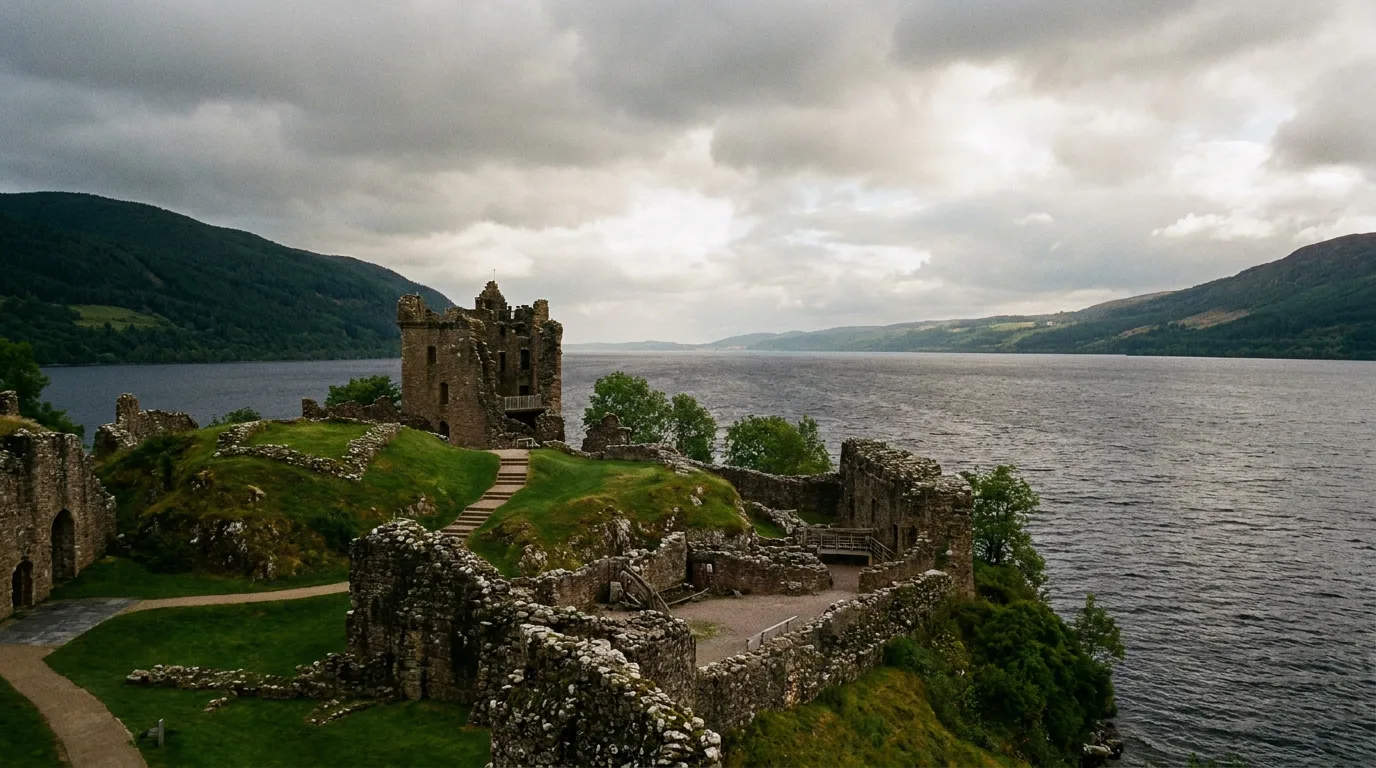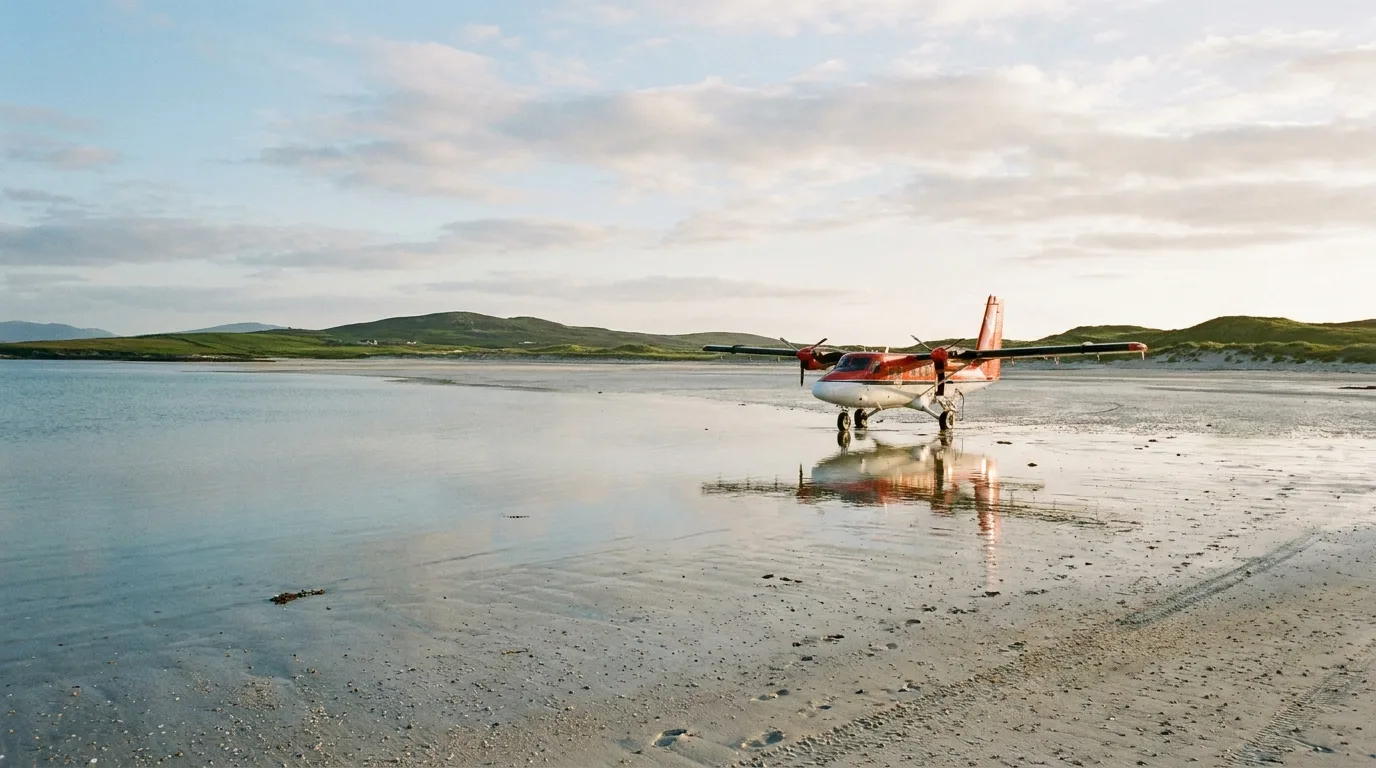
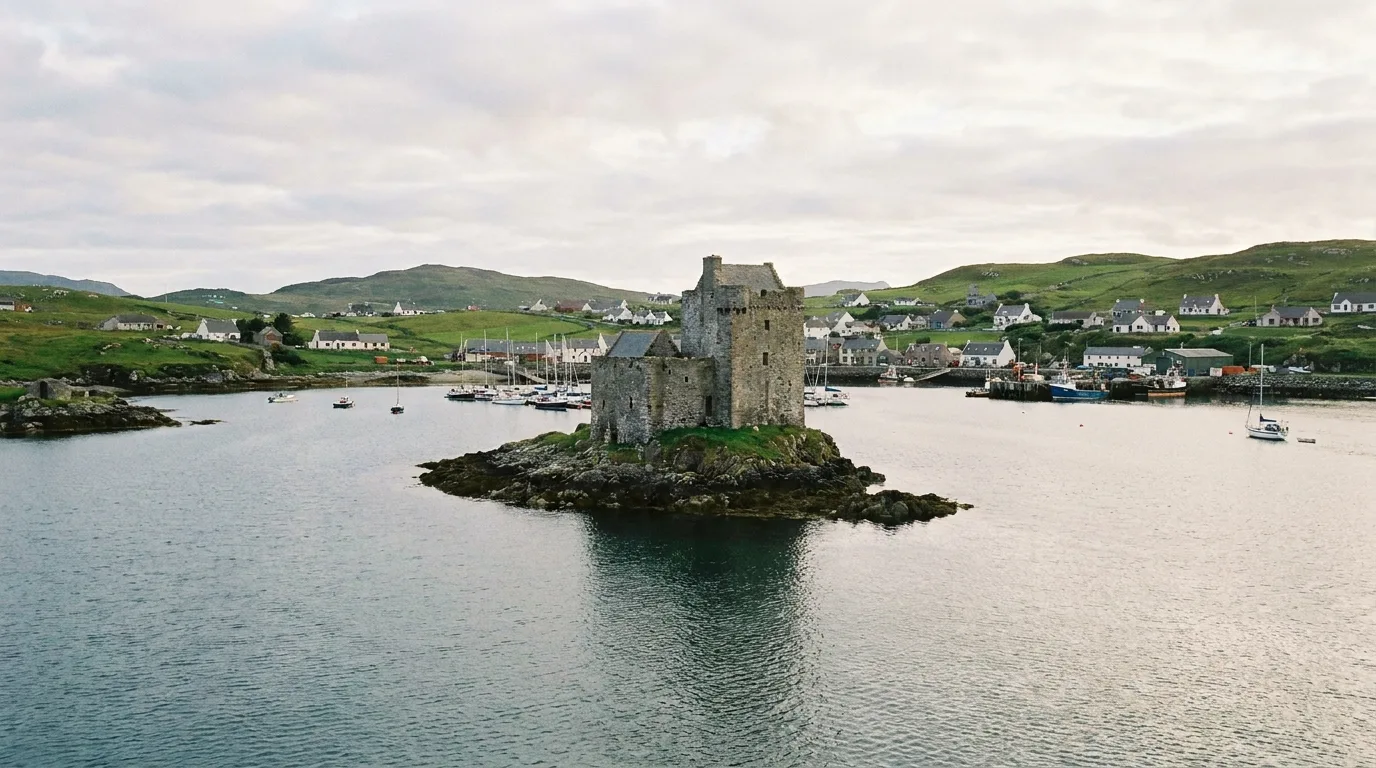
 Kisimul Castle on its islet in Castlebay, Barra · Illustration generated with AI There is exactly one place on Earth where a scheduled airline flight lands on a beach, and it is a two-mile stretch of cockleshell sand called Traigh Mhor on the north end of the Isle of Barra. No tarmac, no lights, no painted markings that survive the day. Twice every 24 hours the sea rolls in and swallows the runway whole, so the timetable does not follow a clock. It follows the tide. This is the most extraordinary short flight in the United Kingdom, and it is easier to take than most people assume.
The route: Glasgow to Barra
Barra (BRR) is served by Loganair from Glasgow (GLA), and only from Glasgow. There is no other scheduled way to fly to the island. The hop takes about 1 hour 15 minutes, and Loganair runs roughly ten flights a week in each direction, though the exact number moves with the season.
This is not a tourist stunt route. It is a lifeline service under the Scottish Government's Public Service Obligation network, the same subsidised connections that keep Barra, Tiree and Campbeltown tied to the mainland. Islanders use it for hospital appointments and school runs. You are buying a seat on a genuine piece of Scottish infrastructure that happens to be one of aviation's great experiences.
Planning the Glasgow to Barra hop?
Barra flights sell out fast on the small Twin Otter, especially in summer. Compare live Loganair fares for the exact GLA to BRR route before dates fill.
Why the timetable changes every day
Traigh Mhor is a tidal beach. At high tide the runway is under the sea, so aircraft can only land at low tide, and low tide shifts by roughly 50 minutes each day. Loganair publishes the Barra schedule around the tides, which is why you will see a morning pattern one week and an afternoon pattern the next rather than a fixed departure time.
The practical upshot: do not assume a departure time from memory or an old timetable. Check the current tidal schedule directly with Loganair when you book, and again before you travel. Build slack into anything you have planned on the mainland for the same day, because a Twin Otter on an exposed Hebridean route is also weather-sensitive, and winter storms do cancel flights.
The aircraft: a 19-seat Twin Otter
Barra is flown by the de Havilland Canada DHC-6 Twin Otter, a rugged 19-seat turboprop built for exactly this kind of short, rough-field flying. Loganair operates a small fleet of them, a mix of classic DHC-6-300s and newer Viking-built DHC-6-400s, and they are the only aircraft in the airline's fleet capable of the beach landing.
Nineteen seats means the cabin is tiny, the flight deck is often in full view, and almost every seat is effectively a window seat. On a clear day the run down the west coast and out over the water is spectacular. It also means capacity is very limited, so book early.
Baggage: pack light, and mean it
The Twin Otter has tight payload limits, and Barra's baggage rules are stricter than the rest of Loganair's network as a result:
- Checked allowance is around 15 kg, and unlike other routes you cannot pre-book extra hold baggage to/from Barra.
- Cabin baggage must be under 6 kg and fit within roughly 40 x 35 x 18 cm.
Confirm the exact current limits with Loganair before you fly. If you are the sort of traveller who fills a large case, this is the route that will make you rethink it.
Flight versus ferry to Barra
You can also reach Barra by CalMac ferry from Oban to Castlebay. Both have their place; it comes down to time, cost and what you want out of the journey.
| Fly (Glasgow to Barra) | Ferry (Oban to Castlebay) | |
|---|---|---|
| Journey time | About 1h 15m in the air | About 4h 45m to 5h direct (longer via South Uist) |
| The experience | The beach landing; aerial views | A slow, scenic Hebridean crossing |
| Vehicle | Foot passengers only | Take your own car across |
| Weather sensitivity | High (small aircraft) | Moderate (sailings still cancel in storms) |
| Best for | A short trip, or the flight itself | Touring the islands by car |
If you are bringing a car to island-hop the Outer Hebrides, the ferry wins by default. If Barra itself is the destination, or the flight is the reason you are going, fly in at least one way. Many people fly one direction and sail the other to get both.
When to go and how to book
Summer is busy and the light is long, but it is also when the 19 seats vanish first. Spring and early autumn are quieter and often calmer to fly. Whenever you go, book the flight as far ahead as you can, because a sold-out Twin Otter has no larger aircraft to swap in.
Accommodation on the island is limited to Castlebay's small hotels, guest houses and self-catering cottages, and it books up in step with the flights. Lock in a refundable room early rather than hoping for a last-minute find.
Where to stay on Barra
Castlebay has a handful of hotels and guest houses that fill months ahead in summer. Reserve a refundable room now and cancel later if plans change.
What to do once you land
Barra is small, walkable and quietly beautiful. Kisimul Castle sits on its own islet in Castlebay harbour, a five-minute boat trip offshore. The white-sand beaches on the west coast are the equal of anywhere in the Hebrides, and the causeway to neighbouring Vatersay adds a second island to explore on the same trip. It is the kind of place where the arrival, stepping off a Twin Otter onto wet sand, is a story you will tell for years.
Plan the rest of your island trip
Barra is one stop on Loganair's island network. See our full guide to flying to the Scottish islands for Orkney, Shetland and the wider Hebrides, or start from any Scottish airport to plan your route.
Route, schedule and baggage details verified against Loganair and CalMac sources in July 2026. Always reconfirm tidal timetables and allowances directly with Loganair before travelling.