Scotland's central belt holds two of the most storied castles in Britain, and they sit surprisingly close together. Edinburgh Castle broods over the capital from its black volcanic rock, home to the nation's crown jewels and a gun that still fires at one o'clock. Forty-odd minutes away, Stirling Castle crowns its own crag, the great palace where the Stewart kings held court and where Mary, Queen of Scots spent her childhood. You can see one in a morning and the other in an afternoon, and you do not need a car to do it. Here is how to plan a trip around both.
Getting to Edinburgh and Stirling
Both castles sit in Scotland's central belt, so either of the region's two main airports works well. Edinburgh Airport (EDI) is the closest gateway and puts you a short tram or bus ride from the city centre, with Edinburgh Castle walkable from there. Glasgow Airport (GLA) is the other strong option, roughly an hour from either castle by train or car. Compare fares into both before you commit, as the cheaper arrival can decide your base.
You genuinely do not need a car for this trip. Edinburgh Castle stands at the top of the Royal Mile, an easy walk from Waverley station and most city-centre hotels. Stirling is one of the best-connected small cities in Scotland: trains run frequently from Edinburgh Waverley (around 40 to 50 minutes) and even faster from Glasgow Queen Street (roughly 30 minutes). From Stirling station the castle is about a 15-minute walk uphill through the old town, or a short hop on the local bus if you would rather not climb. If you are flying into Edinburgh, our guide to the airport tram, taxi and bus options covers getting into town.
Find flights to Edinburgh
Compare fares into Edinburgh, the most convenient gateway for both castles.
Edinburgh Castle
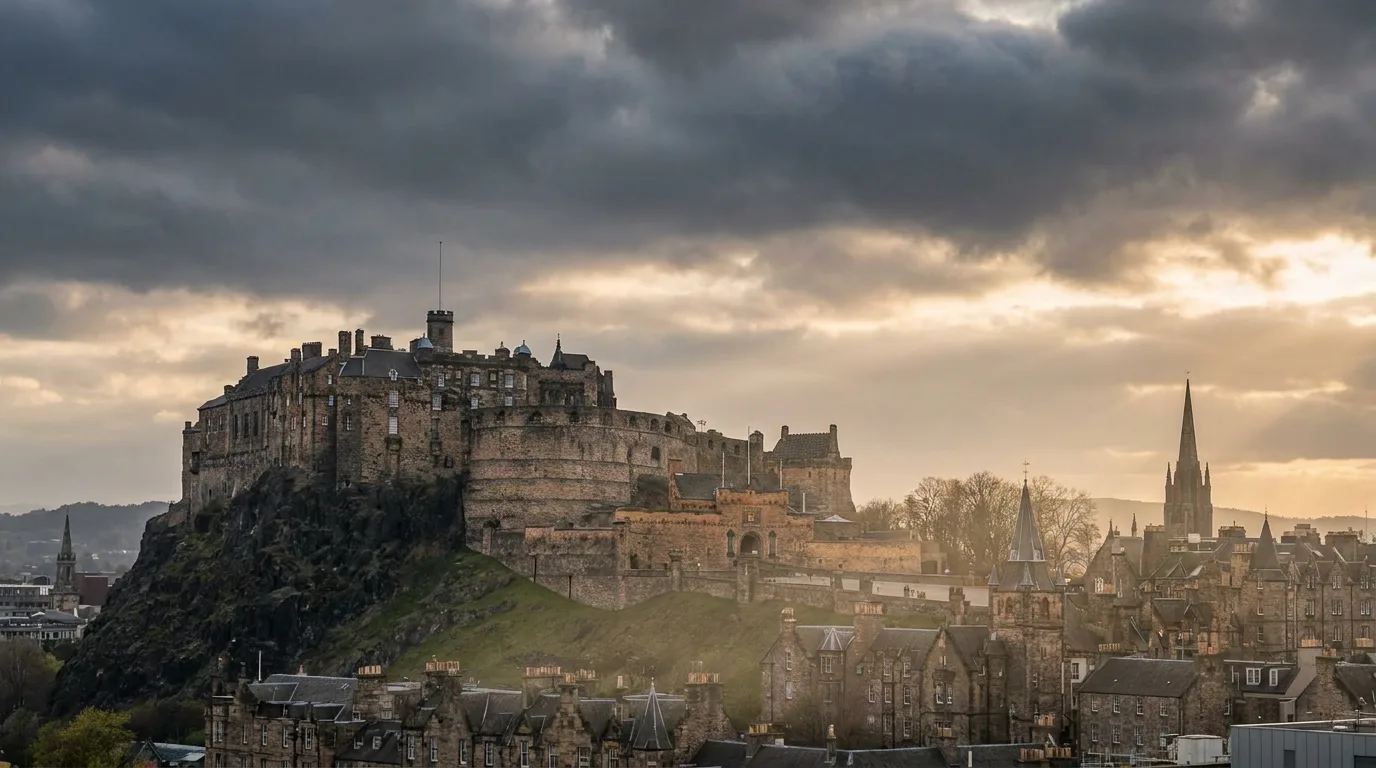
Edinburgh Castle is Scotland's most popular paid visitor attraction, drawing close to two million people a year, and it earns the crowds. It sits on Castle Rock, the plug of an extinct volcano, and has dominated the city skyline for centuries. The approach up the Royal Mile to the esplanade is one of the great city walks in Britain.
Inside, the headline sights are genuinely world-class. The Crown Room in the Royal Palace holds the Honours of Scotland, the oldest surviving crown jewels in the British Isles, made up of the crown, sceptre and sword of state. Displayed alongside them is the Stone of Destiny, the ancient coronation stone of Scottish monarchs, which returned to Scotland in 1996. Elsewhere you can see Mons Meg, a giant medieval siege gun, the tiny St Margaret's Chapel (the oldest building in Edinburgh), and the Scottish National War Memorial.
The castle's most-loved ritual is the One O'Clock Gun. A gun has been fired from the ramparts at 1pm since 1861, originally so that ships in the Firth of Forth could set their clocks. It still sounds every day except Sundays and a couple of public holidays, so time your visit for just before one and find a spot near Mills Mount Battery. The bang is louder than most people expect.
The castle is run by Historic Environment Scotland, the public body that cares for Scotland's historic sites, and its official advice is unambiguous: book online in advance. Tickets often sell out well ahead, especially in summer and during the August festivals, and pre-booking a timed slot both guarantees entry and gets you the best price.
Stirling Castle
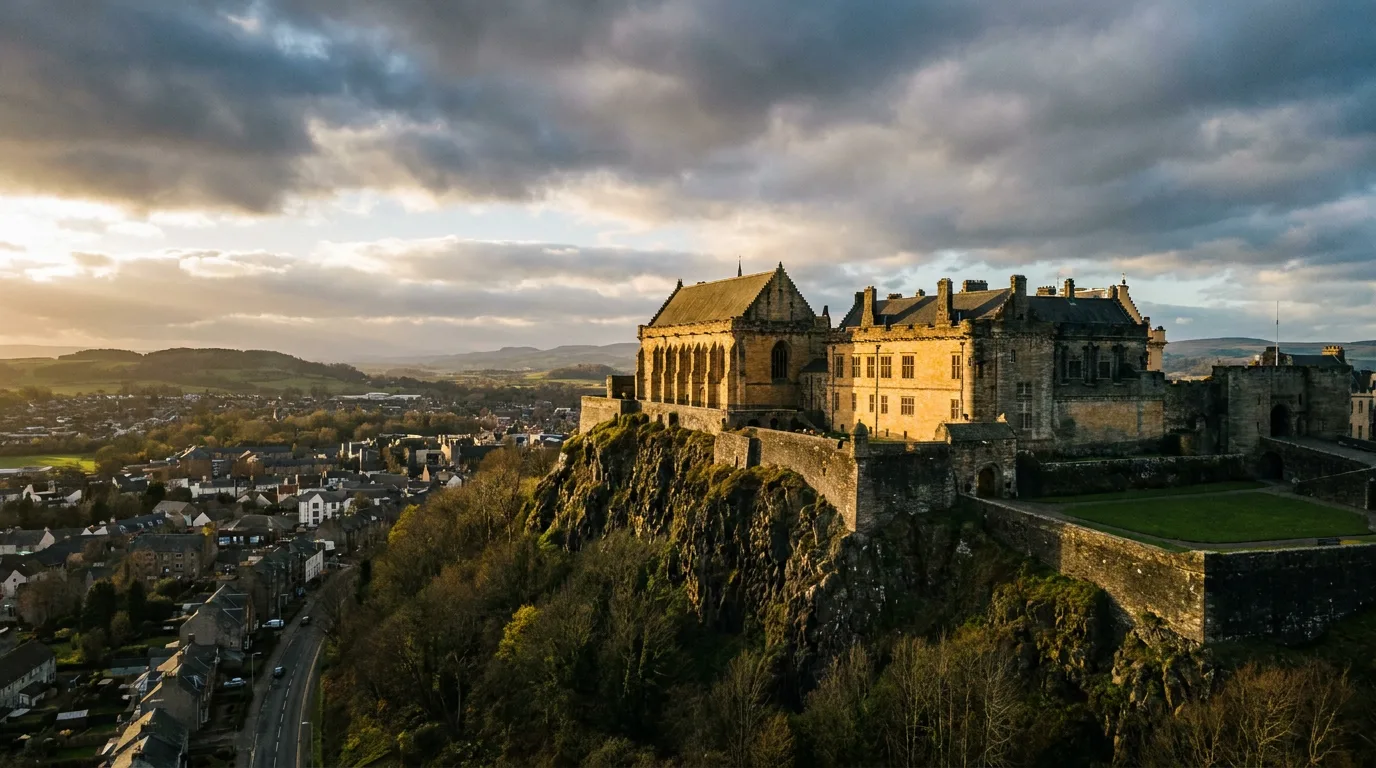 Stirling Castle on its crag above the town · Illustration generated with AI If Edinburgh Castle is Scotland's showpiece, Stirling Castle is its royal heart. It stands on a volcanic crag above a bend in the River Forth, and for the Stewart kings it was the residence that mattered most. Most of what you see today was built between roughly 1490 and 1600 by James IV, James V and James VI, who turned Stirling into a stage for Renaissance kingship.
The centrepiece is the Royal Palace, begun by James V in the 1530s and often described as the first true Renaissance palace in the British Isles. Historic Environment Scotland has restored its royal apartments to their 16th-century glory, with recreated ceiling roundels (the Stirling Heads) and reproductions of the extraordinary Unicorn tapestries. Next to it stands the Great Hall, the grandest secular building of late-medieval Scotland, its exterior rendered in the golden limewash it would have worn in the king's day. This was the childhood home of Mary, Queen of Scots, and the sense of a living royal court is far stronger here than at most castles.
Stirling also makes a brilliant base for a wider historic day out. From the ramparts you can see the National Wallace Monument on its crag across the valley, and the Bannockburn battlefield, where Robert the Bruce defeated the English in 1314, lies just south of the city. As at Edinburgh, booking your castle tickets online in advance is the sensible move.
Doing both: a two-castle trip
The two castles complement each other rather than repeat, which is why doing both is so rewarding. Edinburgh gives you the crown jewels, the sweep of the capital and the theatre of a national fortress. Stirling gives you the intimate, richly restored world of a royal palace and a landscape thick with Scottish history. Seeing them together tells the fuller story of how Scotland was ruled.
The simplest plan is to base yourself in Edinburgh (or Glasgow) and take a day trip to Stirling by train. Do Edinburgh Castle on one morning, then on another day ride out to Stirling, walk up to the castle, and be back in the city by evening. With an early start you could even manage both castles in a single long day, though giving each its own half-day is far more enjoyable. Stirling can also be a relaxed stop if you are travelling between Edinburgh and Glasgow, as it sits neatly between the two.
Where to stay in Edinburgh
Book a central Edinburgh base within walking distance of the castle and easy train links to Stirling.
Tickets and when to go
For both castles the same rule applies: pre-book a timed ticket online. Edinburgh Castle in particular can sell out days or weeks ahead in peak season, and turning up on spec risks a long queue or no entry at all. Prices change from year to year, so check the official sites for current fares rather than relying on figures quoted elsewhere.
To dodge the worst of the crowds, aim for the first entry of the day or the last couple of hours before closing, and favour a weekday over a weekend. Spring and autumn are quieter and often kinder for photographs than the packed summer months. Both castles involve cobbles, steps and steep ground, so wear proper shoes and allow at least two hours inside each. Scottish weather is changeable in any season, so pack a waterproof whatever the forecast says.
Plan the rest of your trip
These two are the obvious starting point, but they are far from the only castles worth your time. Our Scotland castles guide rounds up the ones most worth building a trip around. If you would rather balance the history with a dram, the Lowland whisky distilleries guide covers distilleries within easy reach of both Edinburgh and Glasgow. And for the practical side of arriving and getting around, browse all our airport guides to plan the smoothest route in and out.
Access, ticketing and opening details change. Always confirm current prices, times and availability with edinburghcastle.scot and historicenvironment.scot, and pre-book before you travel.